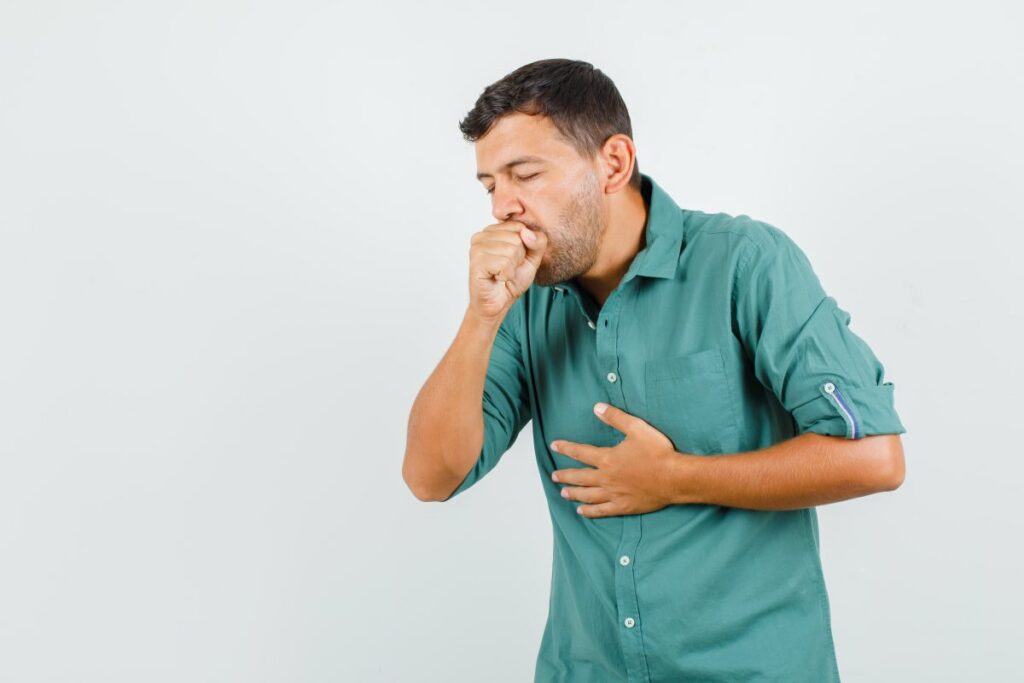
Have you experienced an unrelenting situation of hiccups after eating spicy foods? Hiccups are involuntary contractions of the diaphragm muscle. It can happen at different rates.
If you love eating spicy foods then the reason for experiencing hiccups may be your spicy foods. But what causes this and why some people are prone to experiencing hiccups more than others?
Here, in this article, we are going to wrap up what causes hiccups in general, and 5 surprising reasons why spicy foods make you hiccups.
Let’s dive into the deep!
What causes a hiccup in general?
Hiccups are involuntary contractions of the diaphragm where the muscle separates your chest from the abdomen. This muscle plays an important role in breathing.
In simple words, hiccups are spasms of both your vocal cord and diaphragm. Each contraction occurs followed by a sudden closure of your vocal cord.
This generates the “hic” sound, you can experience hiccups without any specific reason, and also dissolve within a few minutes.
5 reasons why spicy food makes you hiccup:
#1. The presence of Capsaicin:
Peppers contain a naturally occurring chemical called capsaicin that is responsible for the spiciness of the peppers. When you consume hot chili peppers then the capsaicin attaches to pain receptors in your mouth referred to as TRPV1.
If you ate something too spicy and you feel it unbearably painful, that’s TRPV1 at work. At that moment of pain, you can feel that it may stay lifelong, but you must know that it will not stay for a lifetime. It will resolve within a few minutes.
After a given pain receptor has been activated by the capsaicin, then it enters a resting phase, known as functionalization. The receptor will shut off for a while and takes a break from transmitting more signals.
We have capsaicin receptors all through our body, not just in our mouths. That is why when you rub your eyes after touching hot peppers, that action activates the pain receptor in the eyes.
These nerves are also present in the diaphragm, scientists stated that hiccups are involuntary diaphragm spasms. So, it is one theory that capsaicin activates the nerves in your digestive tract and then it stimulates your diaphragm to contract irregularly which leads to hiccups.
#2. Esophagus irritation:
Foods and liquids that are acidic, spicy, and very hot or cold can irritate the esophagus. But scientists are not sure that esophagus irritation is one of the direct causes of hiccups. Also, is the esophagus related to nerves or not?
But both the esophagus and nerves play major roles when it comes to diaphragm spasms. So, it is hard to say which reason is responsible for your hiccups.
Two main nerves control the esophagus. These are the phrenic and the vagus nerves. Both nerves are located close to the esophagus, and swallowing irritating foods can trigger them. This results in hiccups.
#3. Digestive reactions:
Some people having gastrointestinal disorders can experience hiccups when they consume spicy foods. People suffering from peptic ulcers, heartburn, and pancreatitis tend to suffer from high tendencies of hiccupping.
So, as earlier we have mentioned that the presence of spice can irritate your digestive tract which causes the diaphragm to contract at an abnormal rate. This led to hiccups.
#4. Drinking beverages too early:
When you eat spicy food then the first thing you do is reach for a beverage and chug it as early as possible. If you do so, then it may be one of the real reasons for your hiccupping instead of the spicy food that you just ate.
Drinking a glass of cold milk or any other drink that you can find nearby- is pretty common when you are combating a burning mouth.
But, if you are downing a drink too early then it will increase your stomach in size too early. In that case, your stomach starts to press up against the diaphragm; that may lead to hiccups.
Carbonated drinks or alcohol also cause your stomach to get bigger. If you eat your spicy buffalo chicken wings paired with beer, then either the spicy food or the beverage, or the combination can lead to hiccups.
#5. Sudden and extreme temperature changes:
If you are eating too hot and spicy food then it causes a sudden change in temperature inside your esophagus. So, it can lead to contractions of the diaphragm. So, you can experience post-meal hiccups after eating too hot spicy food.
Why do some people experience hiccups while others don’t bother?
It is possible to build up the tolerance of chili peppers by repeated exposure to capsaicin. But the key factor TRPV1 receptors play the key role here. This receptor increases our spice tolerance in our body.
Varying the number and distribution of the capsaicin receptor contribute to our response to spicy foods. Tolerance to spicy food occurs from repeated exposure to capsaicin.
FAQ:
How do you get rid of hiccups from spicy foods?
Ans: You can follow these few steps to get rid of spicy food hiccups. These include:
- Breathe into a paper bag but do not put it over the head.
- You can bite a piece of lemon or taste vinegar
- You can swallow some granulated sugar.
- You can sip ice-cold water.
- You can pull your knees up to your chest and lean forward.
- Massage your diaphragm.
Are hiccups have any harmful affect in the body?
Ans: Commonly, hiccups are very harmless and resolve by themselves within a few minutes. But in some cases, prolonged hiccups for a week or more can be dangerous and you must rush to the doctor for a checkup.
Why do I experience hiccups after eating my meal?
Ans: If you consume too spicy food then you must know that chili peppers contain a chemical known as capsaicin. This compound gives the chilies their unique taste and heat profile. Capsaicin activates the neurons of the diaphragm, then it contracts and leads to hiccups.
Conclusion:
Scientists are still speculating regarding the precise mechanism that is responsible for hiccups. However, there are a few limited theories out there.
Here, we have discussed 5 responsible reasons that make you hiccups. So there is nothing to be worried about if you get hiccups after a meal. You can only follow some tricks to reduce the burning sensation and the contraction of the diaphragm.