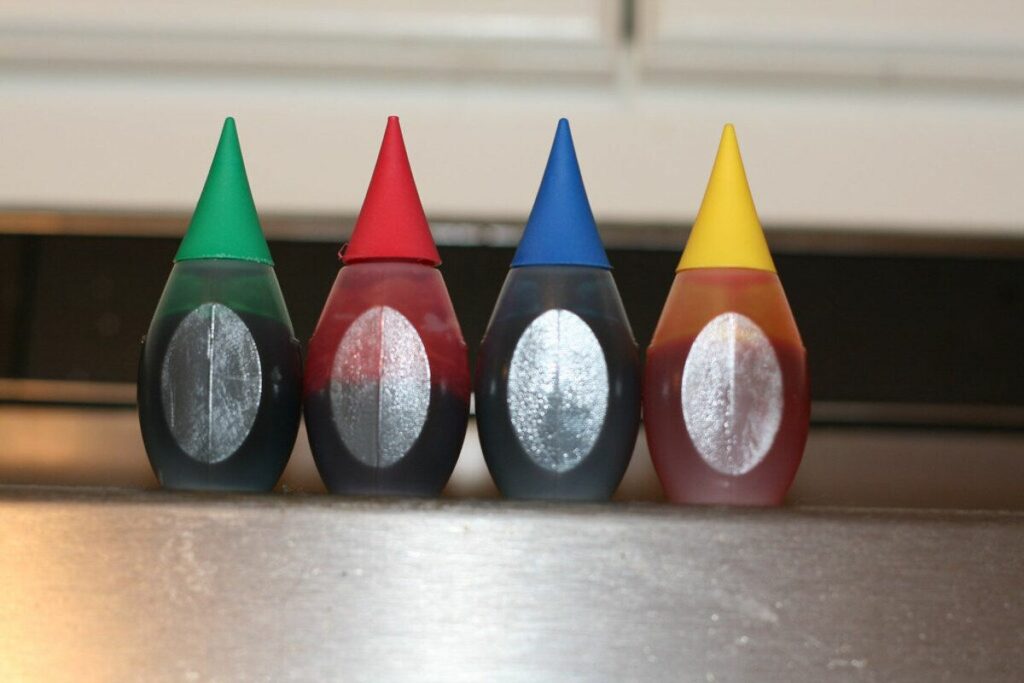
Food coloring is one of the great ways to enhance the vibrancy of homemade desserts. There are many formulas for coloring food including water-based, oil-based, gel-based, and powder-based.
Among all, oil-based food coloring is the best recipe because this water will greatly affect the final result such as candy melts, chocolates, and fat-based products.
In this article, we are going to cover what is oil based food color, 4 easy steps to make oil-based food color, where you can use oil-based food color, and some tips and tricks that you should remember when making oil-based food color.
Let’s dive deep!
What is oil-based food color?
Oil-based food color is a category of food coloring where oil is used as a base instead of water or gel. Oil-based food color commonly contains lecithin, glycerol, and colors.
Oil-based food coloring is also more stable than water-based food color and the color doesn’t fade away easily anymore.
As this food color is made of oil, it is easier to clean off the surface and clothing than water-based food color.
4 easy steps to make oil-based food color:
#1. Prepare the ingredients:
The first you need to do to prepare oil-based food coloring is to collect the ingredients of this recipe. The ingredients are as follows:
- A cup of oil ( you can use corn, vegetable, almond oil, or canola)
- Oil-based food dye
- A disposable spoon
- A microwavable bowl
#2. Microwave the oil:
You can start by putting the oil inside the microwavable bowl. You need to microwave the oil for at least 30 seconds at medium heat. At maximum heat, the food dye will incorporate into the oil.
An important fact you must remember is that you must opt for colorless oil as the base. So the food dye will not have a problem staying true to color.
#3. Use one drop at a time:
When the 30 seconds are over, take out the bowl from the microwave and add the oil-based food dye to it. We suggest putting the food due one drop at once and you can add more if required.
We also recommend using oil-based food dyes instead of water or gel-based food dyes as these dyes will separate and bead into the oil.
#4. Mix the combination:
You can stir the mixture with a disposable spoon for about five minutes or until the mixture is well combined. If you choose a suitable oil-based food dye, combining it with the heated oil will be easier.
If you have not gotten the desired color then you can add more drops to enhance the color and stir accordingly.
But, we will suggest you not to use too much dye. If you use too much food dye then it will result in bitter-tasting oil-based food coloring. Perhaps the taste will not be compatible with your dessert items.
Tips and tricks that you should follow when making oil-based food coloring:
While making the oil-based food coloring then you can follow these below tricks and tips:
- You can use neutral flavored oil such as corn, vegetable, and canola oil is the perfect one. Also, we recommend you can use oil whose natural flavor you desire most.
- You can mix the food coloring with a bit of butter, vegetable oil, or margarine first. This will help the color to be dispersed eventer all through the mixture.
- You should add a little number of food dyes at a time. Since oil-based food coloring is more stable than water-based food coloring, you should not use too much. It will make the colors more intense which will be difficult to rectify.
- You need to store the unused, remaining food color in an airtight container and keep it in a dry, and cool place. This trick will help the food color from changing or fading over time.
- You should clean up any mess or spills with a cloth pad damped with warm water and with mild dish soap.
Where you can use oil-based food coloring?
You can use oil-based food coloring often in baking cakes, cookies, and other baked items for adding a more vibrant hue. You can also use oil-based food coloring in some other applications such as ice cream and candy.
Oil-based food coloring works the best with some recipes where adding water will drastically affect the mixture.
In chocolates, you should never use water-based food color because the water will ruin the chocolate.
The colored chocolates that you bring from the markets are made of oil-based food coloring. The oil-based food coloring ensures smooth and consistent food coloring throughout the entire chocolate.
Candy coats are also sensitive to water, so it will be great to use oil-based food coloring in the recipe to give them life.
You can also cook food in colored oil because it will allow them to absorb the color. Oil-based food coloring is also great if you want to bring color to mozzarella sticks or French fries.
FAQ:
Is gel food coloring oil based?
Ans: No, gel food coloring is not oil based, you can achieve oil-based food coloring from a thickening agent such as corn syrup or glycerin. And mix this agent with water-soluble dyes.
Can I make my oil-based food color at home?
Ans: yes you can make oil-based food color at your home by following a few easy steps. For making the oil-based food color you need to arrange some ingredients such as a cup of vegetable or corn oil, food dye, and a microwavable bowl.
After microwaving the oil for 30 seconds, you need to add drops of food dye to the oil. And then add the mixture very well with a spoon. You can add a few more drops of food dye to achieve your desired oil-based food color.
Wrap up:
It is quite simple to make oil-based food coloring at your home. It also gives you various liberty to choose the colors you desire and how intense you want them to be.
You must look for the right kind of oil because it is the key to the success of making your oil-based food coloring at home.
Hope, this guide will help you to achieve your desired oil-based food coloring at home successfully. You can add this food color to various dishes to enhance the color of the food.