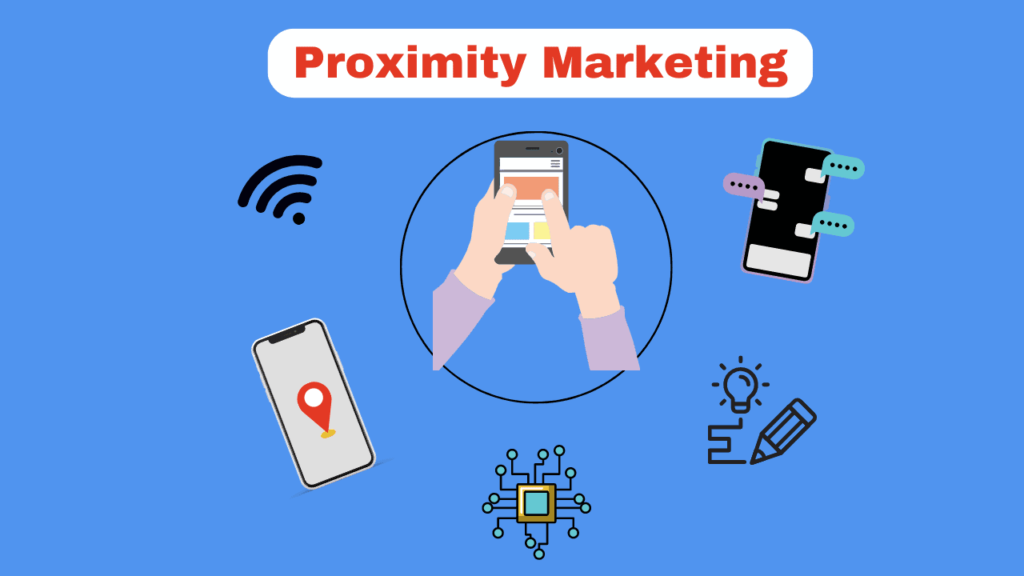
Proximity marketing is an incredible marketing strategy developed to increase business sales, tactics, etc. people are being highly dependent on this strategy to put the limelight on their business. Learn the basics of proximity advertising or marketing with this article.
The complete guide to Proximity marketing
Before learning more about this marketing strategy, you need to know its meaning precisely. What does proximity mean? In simple words, proximity means nearness or closeness. This marketing strategy especially targets an audience within a specific distance. Hence, it is clear that this type of marketing strategy applies to customers who are located within a specific range of the marketing devices such as beacons, QR codes, Wi-Fi, etc. These devices target smartphones that fall under their location range and transmit signals to them.
What are the strategies involved?
Bluetooth beacons
This is undoubtedly one of the most popular marketing strategies involved in advertising your business. The beacons work on the technology of BLE or Bluetooth Low Energy. This Bluetooth proximity marketing technology transmits low-energy signals to Bluetooth-accessed smartphones once they come in the proximity of these hardware devices. The beacons are assigned a campaign that they execute through the transmission of these low-energy signals by sending push-up notifications and alerts on smartphones. It is undoubtedly the most efficient method of marketing strategy.
WiFi
This is probably the simplest of all. Any customer who has a Wi-Fi-accessed phone and signs in to your store WiFi would start receiving contextual messages or notifications according to the assigned campaign. Usually, the WiFi comes with indoor positioning features to enhance the physical activity of the business. Once the potential customers would enter the proximity of the guest WiFi, they would readily start receiving transmitting signals. It means, whenever they are near your store, some notification regarding your store offers, deals, coupons, products, etc would pop up on their screen making them remember to visit your store.
NFC
Near-field communication or NFC is another popular method used in this marketing strategy. However, the only issue associated with this method of proximity advertising is the extreme proximity it requires. Unlike Wi-Fi, Bluetooth beacons, or QR codes, this is a method that is not so widespread and requires extreme closeness to make the campaign work. With the help of the NFC method, customers can pay with their smartphones or smartwatches just by touching the NFC tag on the store. This would further direct them to the required landing page.
QR code
This is another widely used method to enhance business activity vividly. Print the QR code of your business and display it in your store in various noticeable places. A QR code is a scalable barcode that contains information about the offers, deals, coupons, products, etc of the store or company. Whenever a potential customer would come across your printed QR code, they would want to scan it. Once they scan the code using their smartphones, the QR code would direct them to the assigned webpage. It may also contain forms, surveys, quizzes, reviews, etc. You can also use this method on various events, occasions, store launches, product launches, etc.
GPS
The GPS method comes last on the list. Although it is one of the widely used methods of marketing strategy, its effectiveness is considerably low compared to the other methods. The only reason for this is that it involves an outdoor positioning system and not an indoor positioning system. To make use of this method, the customers would have to turn on their GPS location on their smartphones.
Name the places where proximity advertising is used
Proximity advertising or marketing is widely used in shopping malls, food joints, grocery stores, makeup outlets, real estate offices, etc. All these places use this marketing strategy to make their customers aware of their latest trends, deals, coupons, programs, etc.
List the Proximity Beacon Strategies to Boost Sales
- Increased sales – The most common reason to use the proximity beacon marketing strategy is undoubtedly to increase the business or sales. The more the advertisement, the more the sales. It undoubtedly would help expand your business through various means of advertisement. It would increase the interaction between the store owners and customers too.
- Retargeting of customers – The proximity marketing beacons are popularly used to retarget customers with potential. Through the means of various campaigns, forms, and surveys, the customers who frequently visit your store are retargeted once they enter the proximity of your store. Customer retargeting has shown vivid results in the growth of a business for a long time.
- Helps with indoor navigation – A very common use of this marketing strategy is indoor navigation. Once a customer enters your store, they would require assistance in checking out the various products, offers, and deals of your store. Also, if they require information about the positioning of a specific product, they would easily get help through the indoor navigation function. This would make their shopping experience a lot better and would make them want to visit your store again for sure!
- Behavior analysis – Behaviour analysis is another important function of the proximity beacon marketing strategy. Through customer reviews and surveys, it allows the marketing devices to store all the data of the customers for behavior analysis. Without proper behavior analysis as a store owner, it would be difficult for you to learn about the customer experience and the changes you need to make to elevate your business game.
Conclusion
If you are looking forward to opening up a business soon, make sure to learn the basics of proximity advertising and implement it significantly. Take the necessary help from this article and make your company reach new heights through the means of the proximity advertising strategy.
FAQs
Yes. There are 4 elements in this marketing strategy. They are namely, product, price, place, and promotion.
It sends a notification and contextual messages to the smartphones of the customers in the range of the device.
It makes the customers aware of the loyalty points of the store. It also sends updates to customers on significant changes in business hours.